
Combinely: Building Trust Through Transparency
Role: Product Designer
Timeline: 2 months
The Vitals
Eliminating Manual Data Work
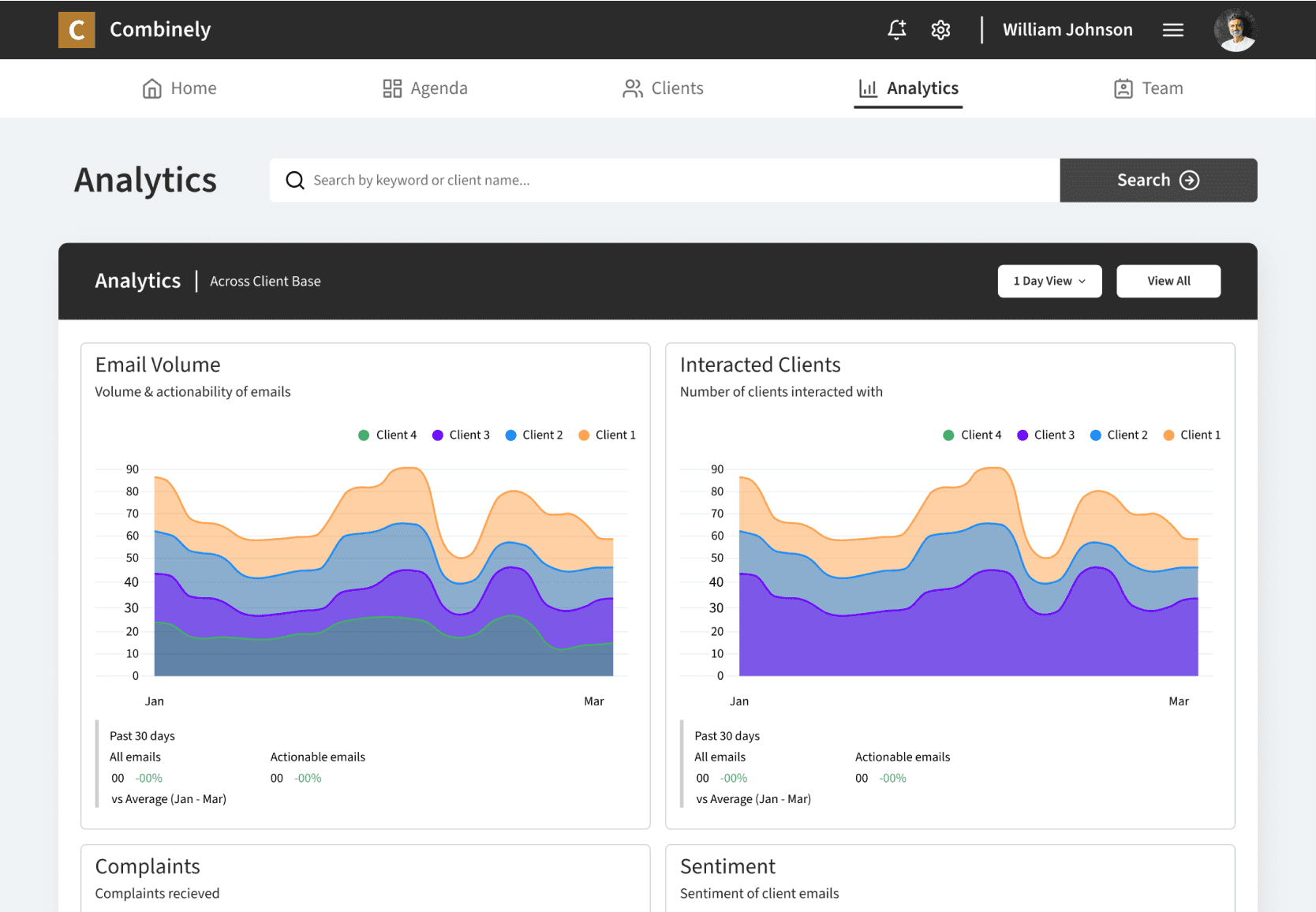
Accountants were spending 15+ minutes manually searching for client communication data, treating the AI assistant as unreliable. I redesigned the Statistics & Insights page (now Analytics) to surface the most critical information automatically: client volume, sentiment trends, and workload distribution. This reduced data retrieval time by 70% and built trust in the AI system.
North Star Metric
Reduction in Manual Retrieval Time
By surfacing client communication metrics in a scannable format on the Analytics page, accountants could identify trends and respond to issues in 30 seconds instead of 15 minutes of searching through raw data.
Impact Metrics
32% Engagement Lift
60% Efficiency Gain
Information Architecture
Prioritizing Critical Information
I reorganized the page to surface high-risk indicators first. Client complaints, sentiment drops, and workload spikes appear at the top of each visualization. This priority-based structure meant accountants could identify issues in seconds rather than scanning through all client data.
The Double work Audit
Identifying the Trust Gap
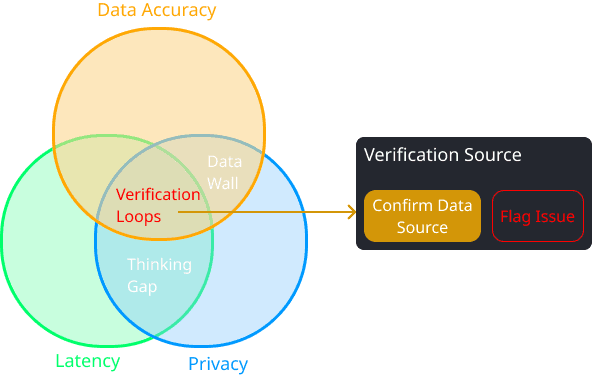
Through workflow audits with accountants, I discovered they were spending nearly half their time manually verifying the AI's outputs. The interface didn't show the underlying data, so users couldn't trust the AI's conclusions without checking themselves. This insight shifted the design focus from simple data visualization to transparency and explainability. I needed to show users how the AI reached its conclusions so they could verify quickly.
Spreadsheet Fatigue Barrier
Making Dense Data Scannable
The original page was a wall of monochromatic tables where every data point looked equally important. Accountants had to perform mental math to identify anomalies, creating friction that discouraged usage. I implemented an accordion-based layout that showed high-level trends by default, with the option to expand for detailed data. This progressive disclosure approach allowed users to scan quickly while maintaining access to technical details when needed.
The Constraint Map
Solving the "Black Box" Friction
Early research revealed a Retrieval Dilemma. Because AI was still a Black Box to most users, they couldn't see why certain decisions were made. This led to manual double-checking that negated the automation's value. I identified this lack of transparency as the primary barrier to professional trust and focused my design on making the logic behind the analytics visible and easy to verify.
The Stakeholder Pivot
Maintaining System Integrity Under Pressure
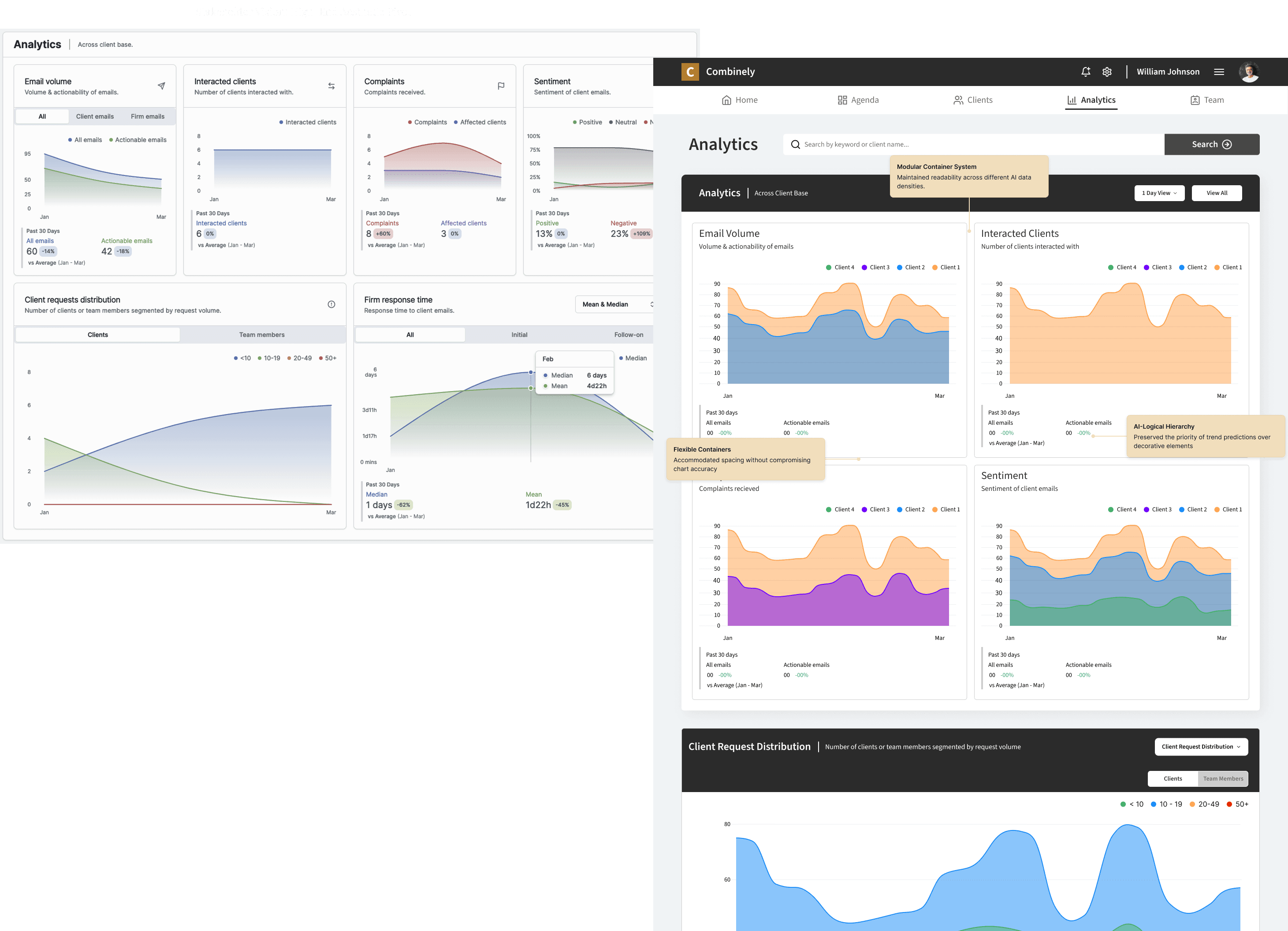
Late in the project, stakeholders requested visual design changes to align with company branding updates. The new aesthetic required different spacing and margins than my original functional framework. I integrated the visual changes while preserving the information hierarchy and data readability that made the page functional. The modular layout system allowed for visual updates without compromising the underlying structure.
Visualizing the Hidden Inbox
NLP-Driven Sentiment Analysis
I designed sentiment visualizations that translated NLP outputs into color-coded indicators on the Analytics page. Working with pre-LLM sentiment analysis models, I created an interface that surfaced client dissatisfaction or urgency patterns at a glance, allowing accountants to prioritize responses without reading through individual communications.
Built to Evolve
Shipped to Production
The redesigned Analytics page launched in February 2024, delivering the 40% reduction in manual retrieval time and 32% increase in engagement measured during the rollout.