
Reality AI Lab: History Hub 1.0
Timeline: 3 -week Sprint
The Product Vitals
The Impact
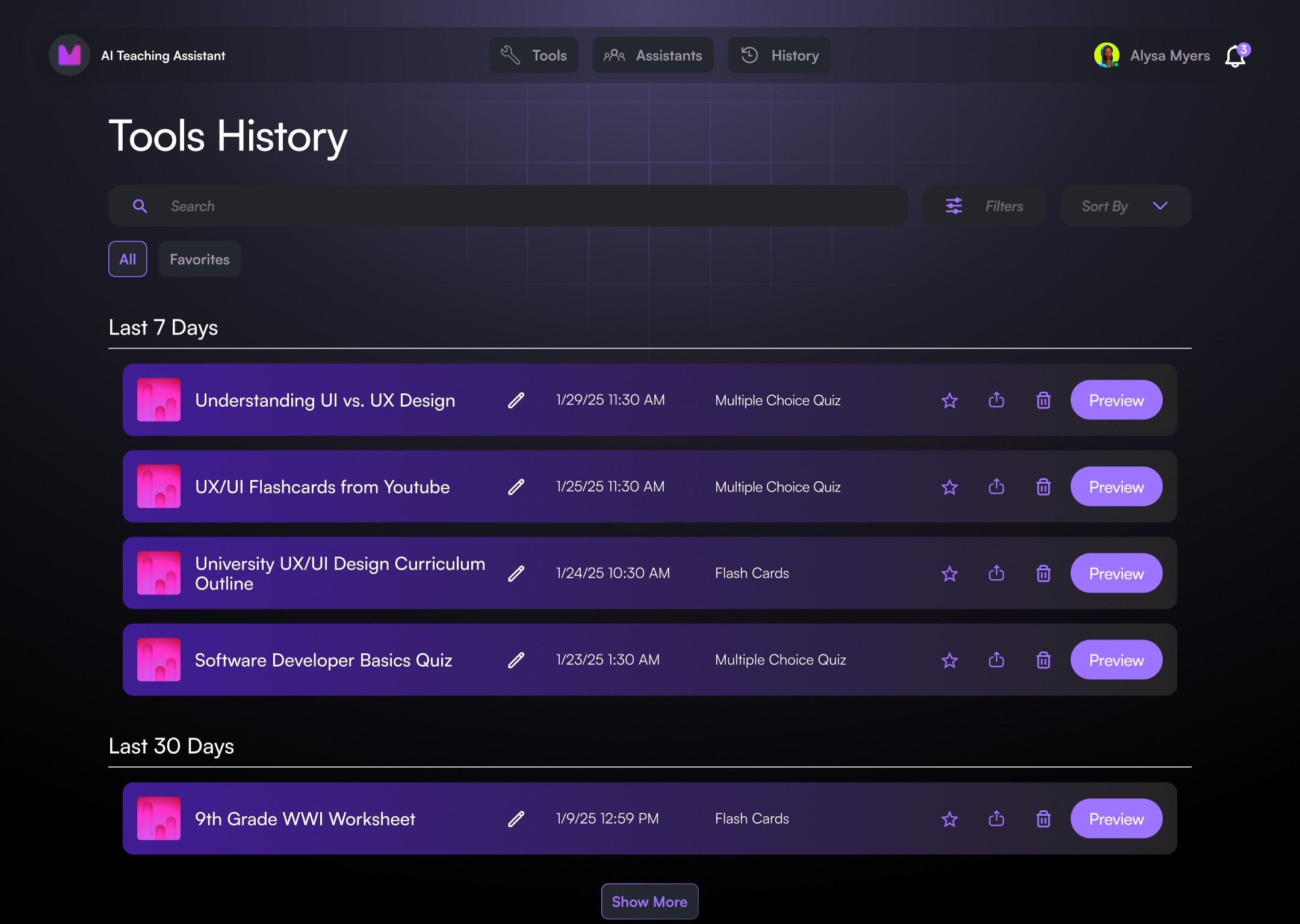
Designed information architecture and filtering system for an AI-powered presentation generation tool, achieving 100% asset retrievability and reducing teacher task completion time by 20%.
Technical Stack:
AI presentation generation platform for K-12 educators with timeline-based content library
North Star Metric
100%
Asset Retrievability
Goal: Eliminate lost AI-generated presentations and reduce the time teachers spent searching for past content
Achievement: Teachers can now retrieve any previously created presentation through timeline filtering and tag-based search, eliminating the 10-15 minutes per session previously spent searching manually
The product Gap
The Challenge
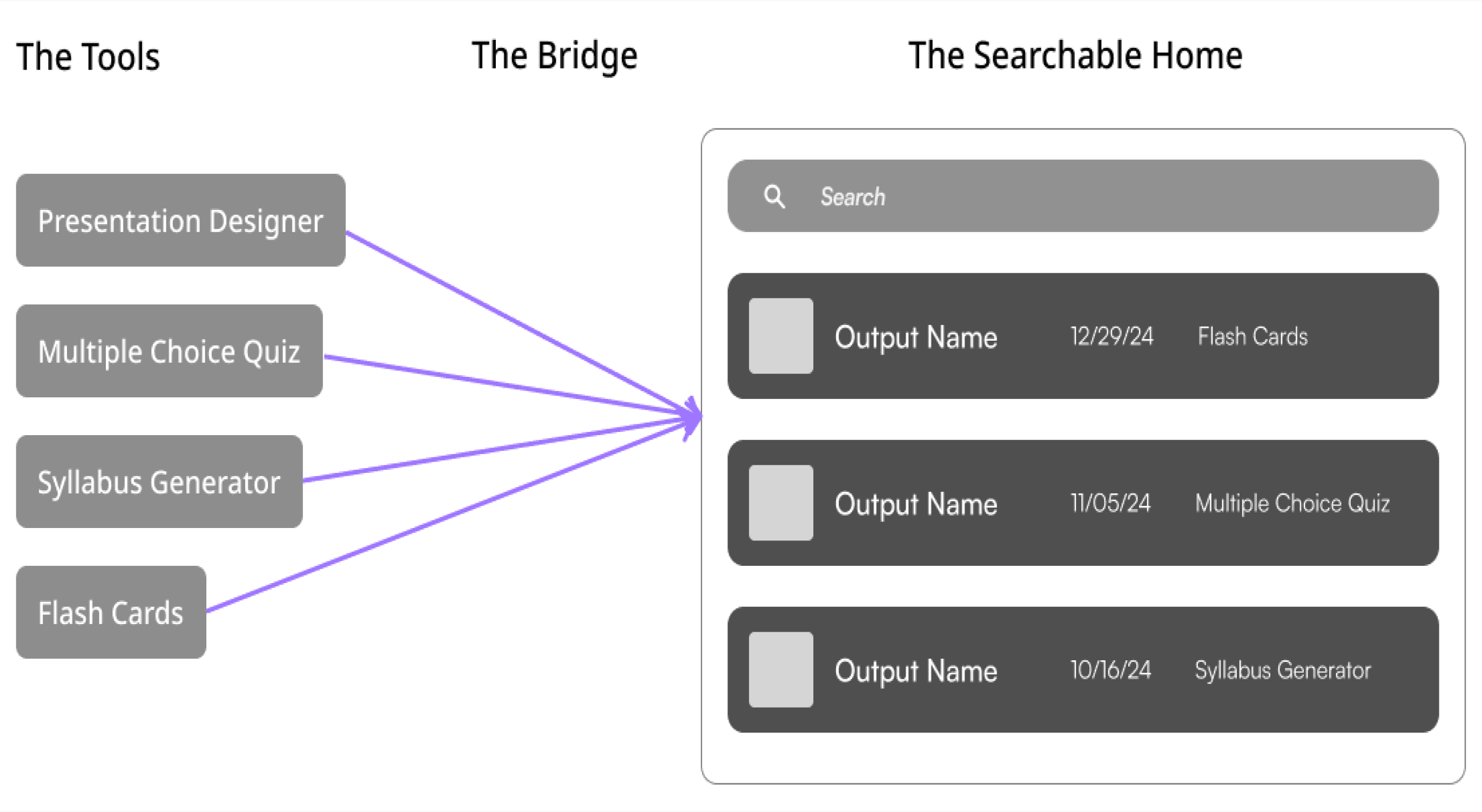
Teachers using Reality AI Lab could generate AI-powered presentations, but these assets were lost immediately after creation due to lack of centralized storage. Every time a teacher wanted to reuse or modify a past presentation, they had to regenerate it from scratch, wasting time and AI generation credits.
“Teachers were re-generating content they hard already made because they couldn’t find it, creating a “retrieval dilemma”
The Logic Gap
Workflow Fragmentation
The platform had separate tools for creating presentations, but no unified way to access past work. Teachers couldn't find previous presentations because they were scattered across different creation sessions with no way to search, filter, or organize them. This fragmentation undermined the platform's value, as teachers spent more time searching than creating.
Critical
The Constraint Map
Technical Boundaries
Backend constraints limited how asset metadata could be queried, requiring careful filter design to work within API limitations
Business Boundaries
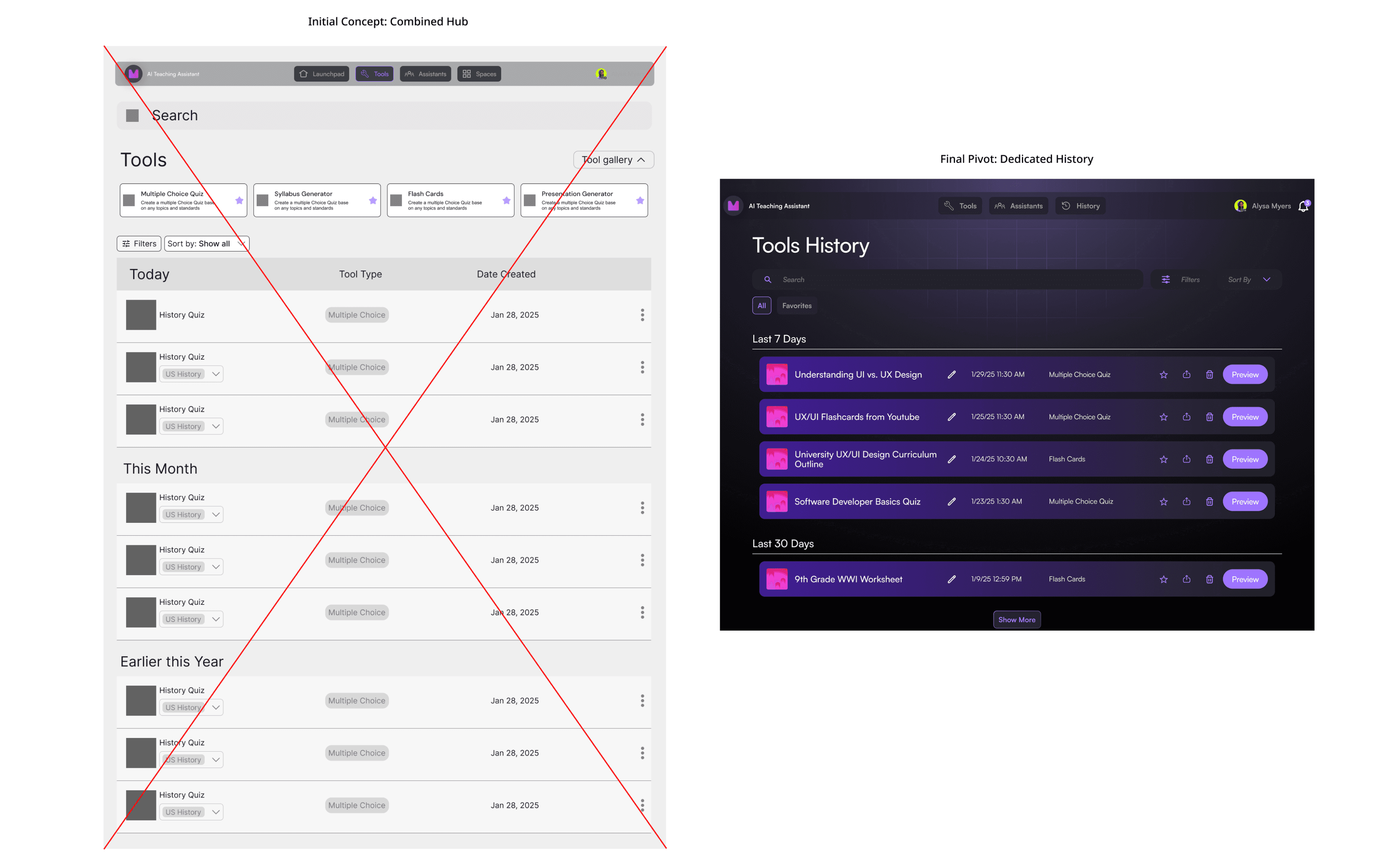
Mid-project, stakeholders decided against combining the creation tool and history view into one interface. This required pivoting to a dedicated history-only page, which meant the content library couldn't include inline editing capabilities.
User Paradox
The system needed to serve both power users (who wanted complex multi-parameter searches) and novice users (who needed simple, low-cognitive-load discovery). Balancing these extremes was the core design challenge.
Strategic Pivots & State Logic
The Decision Log
The Pivot
When stakeholders decided against the integrated Creator/History hub, I refocused the design exclusively on the History view. This allowed me to optimize the interface exclusively for browsing and retrieving past presentations, removing the complexity of inline editing or creation tools. The result was a cleaner, more focused experience for content retrieval.
The Trade-off (Density vs. Utility)
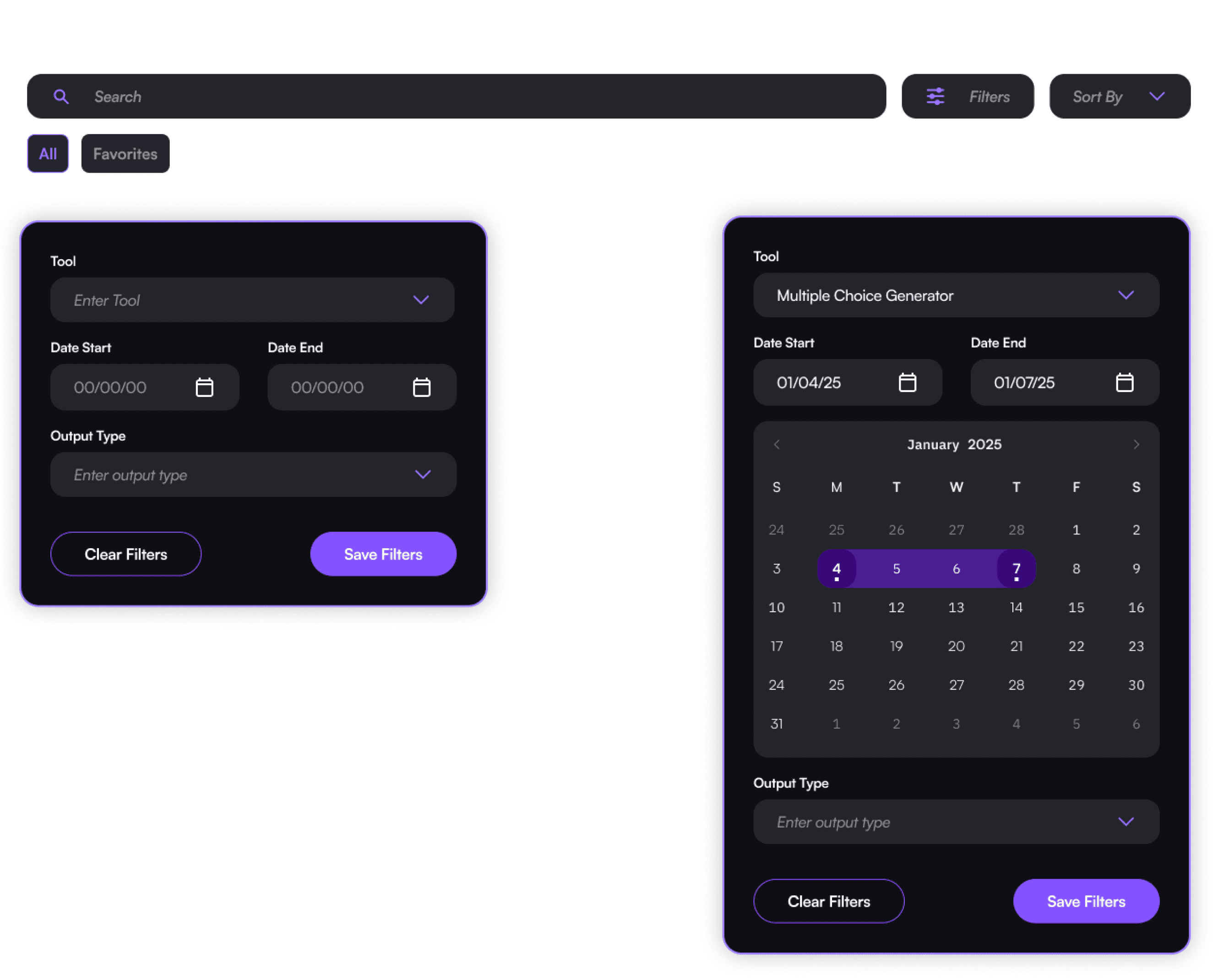
Early prototypes showed every filter option at once, overwhelming novice users. I implemented progressive disclosure by keeping basic filters visible (date range, tags) and moving advanced parameters (multi-select, custom date ranges) into an expandable "Advanced Filter" section. This protected the baseline experience while maintaining power-user capabilities.
System Implementations
State Management: Progressive Disclosure
Default State
Basic filters visible on page load: "All Assets" and "Favorites" tabs, plus date range grouping (Last 7 Days, Last 30 Days, All Time). This keeps the interface simple for quick browsing.
Advanced State
Complex filtering options (multi-select tags, custom date ranges, content type filters) accessible through an "Advanced Filter" button. Power users can combine multiple parameters without overwhelming the default view.
Advanced Filter Component
I designed a new Advanced Filter component that could be reused across the platform. The component standardizes how users apply multiple filters simultaneously (content type, date range, tags) and can be easily adapted for other parts of the product as the platform grows.
Validation
Validation
Internal Feedback Loop
Usability testing with 8 teachers showed the timeline-based organization was intuitive, and the progressive disclosure approach successfully balanced novice and power user needs. The 100% asset retrievability goal was confirmed through testing scenarios where teachers located specific past presentations within 10 seconds.